


SAMUEL HASSELHORN
& AMMIEL BUSHAKEVITZ
The Schubert Project
1828 - 2028
SAMUEL HASSELHORN & AMMIEL BUSHAKEVITZ
An Homage to Franz Schubert
The years 2023-2028 mark 200 years since the five last years of Franz Schubert. This leads up to the 200th anniversary of Schubert’s death in Vienna on 19 November 2028.
In order to pay homage to this important event, baritone Samuel Hasselhorn and pianist Ammiel Bushakevitz have started a multi-genre international project titled “SCHUBERT 200”. A major focus of this project will be the recording of one CD of Schubert’s songs per year for HARMONIA MUNDI, culminating in the year 2028. Each CD will mirror the Lieder that Schubert wrote exactly 200 years earlier.
The “SCHUBERT 200” project will be aimed at a new, young generation of Lieder enthusiasts. The project goal is to and is discover the extent to which Schubert's songs are relevant to our lives in the 21st century and how this connection can be made tangible.
Samuel Hasselhorn, baritone
Winner of the Queen Elisabeth Competition in Brussels, the "Das Lied" Competition in Heidelberg, the International Franz Schubert Competition in Dortmund, winner of the first Franz Schubert Prize of the Franz Schubert Society in Barcelona. Opera engagements at the Vienna State Opera, Berlin State Opera, Milan La Scala; recitals in Wigmore Hall London, Boulez Hall Berlin, Musikverein Vienna and Carnegie Hall New York.
Visit Samuel's personal website here.

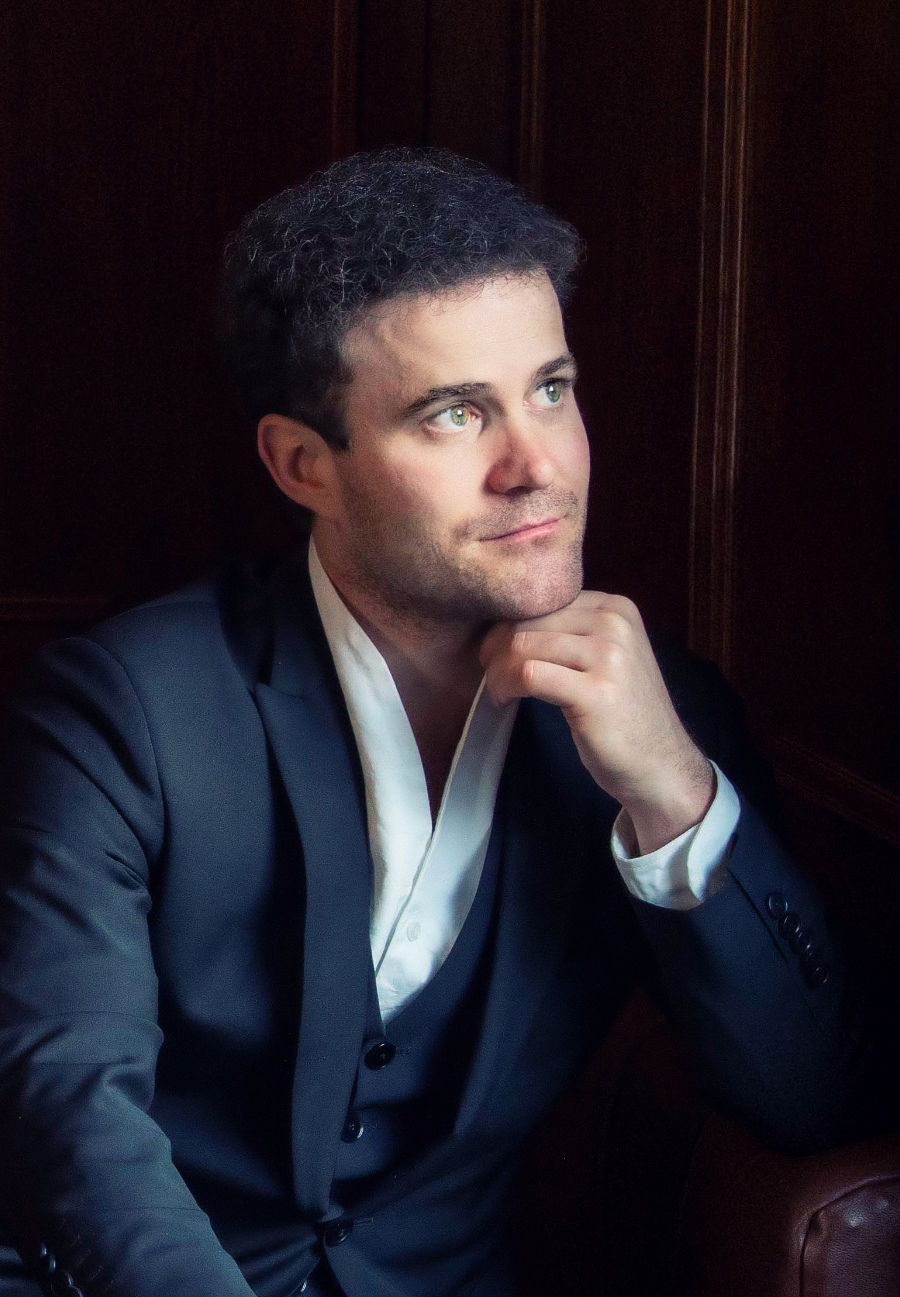
Ammiel Bushakevitz, piano
Winner of the Wigmore Hall Song Competition & the “Das Lied” Competition. Lied studies with Dietrich Fischer-Dieskau. Performances at New York’s Carnegie Hall, Shanghai’s Concert Hall, the Schwarzenberg Schubertiade, Konzerthaus Berlin, Concertgebouw Amsterdam, Wigmore Hall London and at the festivals of Lucerne, Salzburg, Bayreuth, Melbourne, Montreal, Vancouver, Cape Town, Jerusalem & Aix-en-Provence.
Visit Ammiel's personal website here.
„Ein neuer Schubert-Meister seiner Generation“
ORF, Austria
„In a class by itself .“
Gramophone, UK
„Ce pourrait être la plus grande parution schubertienne depuis Fischer-Dieskau“
Le Soir, France
„Une interprétation d’une maturité étonnante“
Le Figaro, France
Concerts
16. August 2026
Saint-Léon-sur-Vézère, Frankreich
Festival du Périgord Noir, Kirche Saint-Léon-sur-Vézère

Released 22 September 2023

Die schöne Müllerin
1823
Schubert discovered in early 1823 that he was suffering from a mortal illness - syphilis. Shortly thereafter, he began composing his great cycle, “Die Schöne Müllerin”. On 8 May 1823 he wrote “My Prayer”: “See, destroyed in dust and ashes, prey to agonizing sorrow, lies my life in torture's thrall, nearing its eternal fall”.
The poet Wilhelm Müller’s moving lyrics about the wandering miller-boy touched Schubert deeply during his time of suffering. “Die schöne Müllerin” became one of the greatest song-cycles ever composed.
Light and Shadows
1824/25
With his reputation in Vienna steadily growing (his concerts with singer Johann Michael Vogl were renowned, and by 1825 he was negotiating with four publishers), Schubert was now at the height of his artistic powers. Yet 1824 was perhaps the most miserable of Schubert’s entire life. His friends had left Vienna and he was depressed and feeling the effects of his physical illness: “I feel like the most unfortunate, miserable person in the world. Imagine a person whose health will never get better and who, out of desperation, keeps making things worse instead of better. Imagine a man whose brightest hopes have been dashed and ask yourself whether that is not the most wretched man on earth?"
The year 1825, however, brought light to Schubert’s life. He traveled with his friend Vogl throughout Austria during the summer and felt his powers and hopes returning.

Released 28 February 2025


Hope
1826
The year 1826 was marked by great dreams and hopes, all of which again remained unfulfilled. Schubert was a pioneer of the early Romantic period: he belonged to the first generation of freelance artists – before him almost all composers worked for royal courts or for the nobility.
Apart from his work as a teacher at a Viennese suburban school, Schubert held no official position in his entire life. The position of Vice-Kapellmeister at the Imperial Court Orchestra, for which he applied in 1826, was not awarded to him.

Released 17 April 2026
COMING RELEASES
Winterreise
1827
Schubert’s final two years produced an outpouring of masterpieces: the C-major String Quintet, the last 3 piano sonatas, the Impromptus, the Fantasy for Piano and Violin, the two Piano Trios – and the greatest song cycle ever composed, “Winterreise”.
This monumental work has long fascinated musicians, film makers, artists and even psychoanalysts.

Expected release date: early 2027
Schwanengesang & late Lieder
1828
The final year of Schubert’s life was just like his life, a juxtaposition of love and pain. The summer of 1828 was perhaps the happiest of his life – his health was stable until the final weeks of his life, before his death at the age of 31. His encounter with the poetry of Heinrich Heine was a great inspiration, even though he only set 6 Heine poems to music before he died.
"For many long years I felt torn between the greatest grief and the greatest love. Whenever I tried to sing of love, it turned to pain. And again, when I tried to sing of pain, it turned to love. Thus were love and pain divided in me." Schubert - Mein Traum (My Dream).
Expected release date: early 2028
SWR Podcast
WORKSHOP DISCUSSIONS ABOUT SCHUBERT SONGS
Why do Schubert's songs still move us so deeply today, 200 years after they were written? The duo Samuel Hasselhorn and Ammiel Bushakevitz explore this question together with SWR music editor Christiane Peterlein.
Samuel Hasselhorn and Ammiel Bushakevitz play excerpts from songs that are particularly important to them and talk about the themes they convey: loneliness, longing, the intoxication of love – universal feelings that connect us humans across time and space.
For each episode, the two bring along a personal item, the “piece,” that illustrates their relationship to the song in question: a teenage love letter, a bonsai tree, or even a walking aid make tangible what Schubert's songs have to do with us humans in the 21st century.
The podcast is only available in German.

EPISODE 1: IMPATIENCE
The intoxication of first love – this is the subject of a love letter that pianist Ammiel Bushakevitz received as a teenager and Schubert's song “Impatience” from “Die schöne Müllerin” (The Beautiful Miller Girl).

EPISODE 2: IN THE EVENING GLOW
What does pianist Ammiel Bushakevitz's bonsai tree have to do with Schubert's song “Im Abendrot”? This episode reveals all.

EPISODE 3: DISSOLUTION
All bodies are vulnerable, all people are mortal. How do musicians deal with this? That is the subject of this episode on Schubert's song “Auflösung.”
„Man wird getragen von einem Flow der Musik, der sich gut anfühlt, fein ausbalanciert ist, niederschwellig mitnimmt und trotzdem nachhaltig beeindruckt und begeistert. Und dieser Sänger bringt das Kunststück fertig, selbst oft gehörte Lieder wieder neu funkeln zu lassen, weitere Tiefenschichten bloßzulegen – ohne dabei wirklich viel zu „machen“. Das ist sehr besonders.“
RONDO, Manuel Brug, 01.03.2025
„S’il confirme ce premier essai, ce pourrait être la plus grande parution schubertienne depuis Fischer-Dieskau."
Le Soir, Serge Martin, 28.12.2023 über „Die Schöne Müllerin”
„S’il confirme ce premier essai, ce pourrait être la plus grande parution schubertienne depuis Fischer-Dieskau.“
Le Soir, Serge Martin, 28.12.2023 über „Die Schöne Müllerin”
„S’il confirme ce premier essai, ce pourrait être la plus grande parution schubertienne depuis Fischer-Dieskau."
Le Soir, Serge Martin, 28.12.2023 über „Die Schöne Müllerin”
„Was der Bariton aus seinem Stimmpotential macht, ist wirklich faszinierend. Er schafft nämlich etwas, das man von einer zeitgemäßen Interpretation erwarten darf: Emotion und Intellekt zusammenzubringen, musikalisch mitreißend zu singen und dabei einem klar durchdachten Interpretations-Konzept zu folgen. “
ORF, Rainer Elstner, 20.09.2023
„The many great Die schöne Müllerin recordings are complemented by the highly personal but well-studied phrase readings of baritone Samuel Hasselhorn and pianist Ammiel Bushakevitz, delivered without the weight of tradition or revisionism."
Gramophone, David Patrick Stearns, November 2023
„The many great Die schöne Müllerin recordings are complemented by the highly personal but well-studied phrase readings of baritone Samuel Hasselhorn and pianist Ammiel Bushakevitz, delivered without the weight of tradition or revisionism.“
Gramophone, David Patrick Stearns, November 2023
„The many great Die schöne Müllerin recordings are complemented by the highly personal but well-studied phrase readings of baritone Samuel Hasselhorn and pianist Ammiel Bushakevitz, delivered without the weight of tradition or revisionism."
Gramophone, David Patrick Stearns, November 2023
„Hasselhorns Textausgestaltung ist auch in den folgenden Liedern agogisch aus gewogen, dazu wohltuend fundiert, nuanciert und differenziert, ohne dass er seine Stimme übermäßig forcieren müsste. In Bushakevitz weiß er einen versierten, eloquenten wie sensitiven Partner an seiner Seite; der Klang des Steinway-D-Flügels ist gleichermaßen gefüllt wie farbenreich, variabel zwischen beinahe heroischem Aufbegehren und sanfter Innerlichkeit pendelnd.“
Opernwelt 03/2025, Jürgen Otten
„Une très grande version d'un cycle inépuisable. À écouter absolument.“
Forum Opera, Charles Sigel, 13.10.2023
„Une très grande version d'un cycle inépuisable. À écouter absolument.“
Forum Opera, Charles Sigel, 13.10.2023
„Une très grande version d'un cycle inépuisable. À écouter absolument.“
Forum Opera, Charles Sigel, 13.10.2023
„… eine eigene, mutige, auch grenzwertige Sicht, die etwas Situatives, gleichzeitig etwas Meditatives hat. Beobachten, Staunen, Reflektieren. Auch Ammiel Bushakevitz trägt diesen Ansatz mit [...]. Innerhalb der einzelnen Lieder entsteht so eine große Breite gegensätzlicher Ausdrucksformen. Hasselhorns unmittelbare, warme, wandlungsfähige Stimme lässt mit Spannung die nächsten Folgen dieser Edition erwarten.“
Concerti, Christian Lahneck, 27.09.2023
„Da sind hörbar nicht nur die Titelwahl und -abfolge, sondern auch jede einzelne Liedstrophe und oft sogar -zeile mit hoher Intelligenz ausgeformt, vokal wie instrumental gleich differenziert in den Farbregistern wie in Artikulation und Dynamik.“
FonoForum 08/2025, Gerald Felber
„Da sind hörbar nicht nur die Titelwahl und -abfolge, sondern auch jede einzelne Liedstrophe und oft sogar -zeile mit hoher Intelligenz ausgeformt, vokal wie instrumental gleich differenziert in den Farbregistern wie in Artikulation und Dynamik.“
FonoForum 08/2025, Gerald Felber
„S’il confirme ce premier essai, ce pourrait être la plus grande parution schubertienne depuis Fischer-Dieskau."
Le Soir, Serge Martin, 28.12.2023 über „Die Schöne Müllerin”
„Es ist ein großer Grund zur Freude, dass es heute Künstler gibt, für die die Tiefe und Menschlichkeit der Schubert-Lieder so wichtig sind, dass sie für uns unverzichtbar sind.“
Sylvain Fort, Diapason, France
„There are endless and outstanding interpretations of this beloved opus, but Hasselhorn’s sensitive characterization and narration is quite special. One senses in every measure how he and his pianist, Ammiel Bushakevitz, have taken apart the text and music to understand them in their deepest essence.“
Pizzicato, Alain Steffen, 25.09.2023
„There are endless and outstanding interpretations of this beloved opus, but Hasselhorn’s sensitive characterization and narration is quite special. One senses in every measure how he and his pianist, Ammiel Bushakevitz, have taken apart the text and music to understand them in their deepest essence.“
Pizzicato, Alain Steffen, 25.09.2023
„There are endless and outstanding interpretations of this beloved opus, but Hasselhorn’s sensitive characterization and narration is quite special. One senses in every measure how he and his pianist, Ammiel Bushakevitz, have taken apart the text and music to understand them in their deepest essence.“
Pizzicato, Alain Steffen, 25.09.2023
„Man wird getragen von einem Flow der Musik, der sich gut anfühlt, fein ausbalanciert ist, niederschwellig mitnimmt und trotzdem nachhaltig beeindruckt und begeistert. Und dieser Sänger bringt das Kunststück fertig, selbst oft gehörte Lieder wieder neu funkeln zu lassen, weitere Tiefenschichten bloßzulegen – ohne dabei wirklich viel zu „machen“. Das ist sehr besonders.“
RONDO, Manuel Brug, 01.03.2025
„S’il confirme ce premier essai, ce pourrait être la plus grande parution schubertienne depuis Fischer-Dieskau.“
Le Soir, Serge Martin, 28.12.2023 über „Die Schöne Müllerin”
„Was der Bariton aus seinem Stimmpotential macht, ist wirklich faszinierend. Er schafft nämlich etwas, das man von einer zeitgemäßen Interpretation erwarten darf: Emotion und Intellekt zusammenzubringen, musikalisch mitreißend zu singen und dabei einem klar durchdachten Interpretations-Konzept zu folgen. Dazu braucht es schon dieses Niveau der Stimmbeherrschung. Pianist Ammiel Bushakevitz folgt bis ins kleinste Detail und gibt dabei der Stimme breiten Raum. Hasselhorn kann dadurch auch die leisesten Nuancen ausdifferenzieren. Das ist große Interpretationskunst.“
ORF, Rainer Elstner, 20.09.2023
„The many great Die schöne Müllerin recordings are complemented by the highly personal but well-studied phrase readings of baritone Samuel Hasselhorn and pianist Ammiel Bushakevitz, delivered without the weight of tradition or revisionism.“
Gramophone, David Patrick Stearns, November 2023
„Hasselhorns Textausgestaltung ist auch in den folgenden Liedern agogisch aus gewogen, dazu wohltuend fundiert, nuanciert und differenziert, ohne dass er seine Stimme übermäßig forcieren müsste. In Bushakevitz weiß er einen versierten, eloquenten wie sensitiven Partner an seiner Seite; der Klang des Steinway-D-Flügels ist gleichermaßen gefüllt wie farbenreich, variabel zwischen beinahe heroischem Aufbegehren und sanfter Innerlichkeit pendelnd.“
Opernwelt 03/2025, Jürgen Otten
„Une très grande version d'un cycle inépuisable. À écouter absolument.“
Forum Opera, Charles Sigel, 13.10.2023
„… eine eigene, mutige, auch grenzwertige Sicht, die etwas Situatives, gleichzeitig etwas Meditatives hat. Beobachten, Staunen, Reflektieren. Auch Ammiel Bushakevitz trägt diesen Ansatz mit [...]. Innerhalb der einzelnen Lieder entsteht so eine große Breite gegensätzlicher Ausdrucksformen. Hasselhorns unmittelbare, warme, wandlungsfähige Stimme lässt mit Spannung die nächsten Folgen dieser Edition erwarten.“
Concerti, Christian Lahneck, 27.09.2023
„Da sind hörbar nicht nur die Titelwahl und -abfolge, sondern auch jede einzelne Liedstrophe und oft sogar -zeile mit hoher Intelligenz ausgeformt, vokal wie instrumental gleich differenziert in den Farbregistern wie in Artikulation und Dynamik.“
FonoForum 08/2025, Gerald Felber
„Es ist ein großer Grund zur Freude, dass es heute Künstler gibt, für die die Tiefe und Menschlichkeit der Schubert-Lieder so wichtig sind, dass sie für uns unverzichtbar sind.“
Sylvain Fort, Diapason, France
„There are endless and outstanding interpretations of this beloved opus, but Hasselhorn’s sensitive characterization and narration is quite special. One senses in every measure how he and his pianist, Ammiel Bushakevitz, have taken apart the text and music to understand them in their deepest essence.“
Pizzicato, Alain Steffen, 25.09.2023

download
© Olivier Lauriot dit Prévost

download
© Uwe Arens

download
© Felix Broede

Die schöne Müllerin, F. Schubert | Die liebe Farbe

[CLIP] Die schöne Müllerin, F. Schubert | Halt!

Franz Schubert "Willkommen & Abschied" (Goethe)
Contact
SAMUEL HASSELHORN

Andreas Dellert (Executive Director)
Hilbert Artists Management
Maximilianstraße 22
80539 Munich
Germany
AMMIEL BUSHAKEVITZ

Elisabeth Ehlers (Director, General Management)
KünstlerSekretariat am Gasteig oHG
Montgelasstraße 2
81679 Munich
Germany
PR

Birgit Niemeyer (Director)
Birgit Niemeyer
Weserstr. 68
12045 Berlin
Germany
RECORD LABEL

Jean-Marc Berns (Marketing and Development Director)
PIAS / Harmonia Mundi Musique
14 rue Milton
75009 Paris
France

The Schubert Project
1828 - 2028
SAMUEL HASSELHORN
& AMMIEL BUSHAKEVITZ